Current Screening Practices in Pakistan: Gaps and Opportunities
As an audiologist and co‑founder of Dr Hina Hearing Institute, I’m often asked why we talk so passionately about newborn hearing screening. The short answer is that hearing loss can steal a child’s ability to communicate before they even utter their first words. Without early detection, families may not realise there is a problem until speech delays appear months or years later.
Why newborn hearing screening matters
In Pakistan, about one to two babies in every 1 000 are born with profound bilateral hearing losshospitals.aku.edu. A simple neonatal hearing test can identify these impairments shortly after birth, allowing families and clinicians to intervene before the critical language‑development window closes. Early detection is not just about catching severe losses; mild to moderate losses can also go unnoticed. Evidence shows that neonatal screening should occur by one month of age, diagnosis by three months and intervention by six months, because delayed detection leads to speech, language, social and educational problemsemro.who.int. Without universal screening, 26 % of mild hearing losses may still be missedemro.who.int.
What’s happening in Pakistan
Despite the clear benefits, Pakistan lacks a national neonatal hearing screening (NNHS) programmepmc.ncbi.nlm.nih.gov. Hospital administrators interviewed in Islamabad emphasised that while screening equipment and protocols exist, programmes are fragmented and often limited to tertiary hospitalspmc.ncbi.nlm.nih.gov. Key barriers identified include:
- Lack of awareness among the public and even some healthcare professionals about the importance of early identificationpmc.ncbi.nlm.nih.gov.
- Poor health infrastructure and overburdened tertiary care centres, making it difficult to integrate screening into routine carepmc.ncbi.nlm.nih.gov.
- Absence of referral pathways between obstetrics and audiology services, meaning babies who fail initial tests may never receive follow‑uppmc.ncbi.nlm.nih.gov.
- Limited financial and human resources, especially in rural areas where most births occur at homepmc.ncbi.nlm.nih.gov.
A recent study on hearing impairment’s impact on Pakistani families underscores the consequences of these gaps: late identification leads to delayed development and imposes financial and emotional strain on parentsemro.who.int.
The role of Dr Hina Hearing Institute
Our institute was founded to address exactly these gaps. We offer comprehensive hearing assessment and management services, including newborn screening, paediatric diagnostics, and family counselling. Here’s what we are doing:
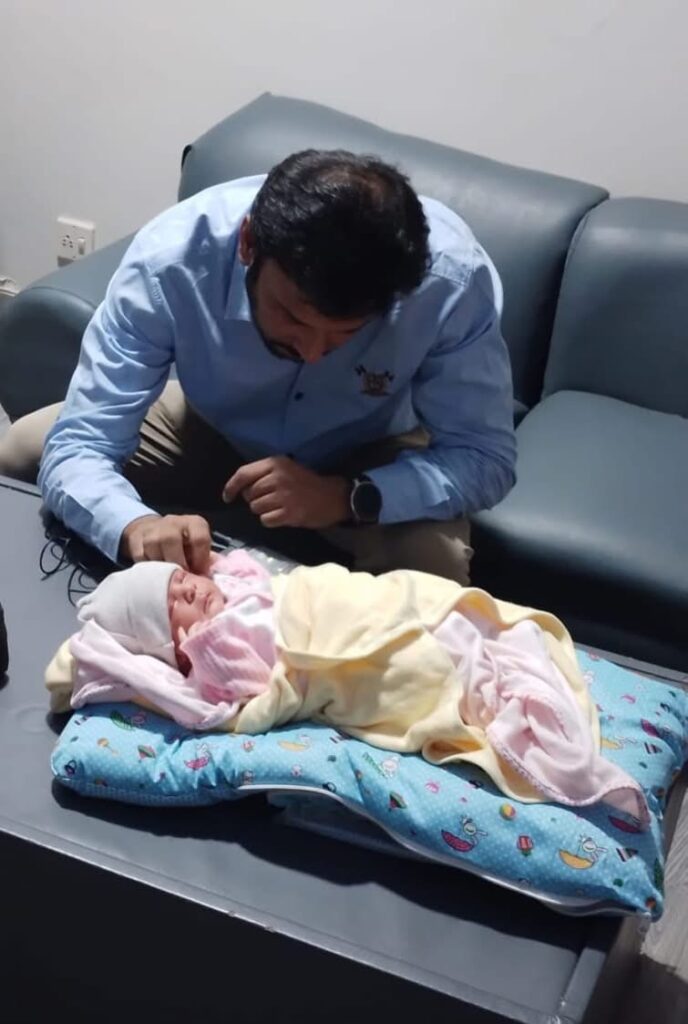
- Screening and early intervention: We use otoacoustic emissions and auditory brainstem response tests to screen newborns, following the 1‑3‑6 guideline for screening, diagnosis and interventionemro.who.int. When a baby fails the initial test, we provide confirmatory diagnostics and fit hearing aids or recommend cochlear implants as appropriate.
- Community outreach: In partnership with organisations like the Karachi Down Syndrome Programme (KDSP), we hold community camps. For example, a World Hearing Day camp organised with KDSP provided hearing services to more than 45 individualsglobalgiving.org. These initiatives raise awareness among parents and health‑care workers and demonstrate the feasibility of mobile screening in underserved areas.
- Training and advocacy: We train nurses and midwives to recognise signs of hearing loss and counsel parents. We also advocate for national policies that would make newborn hearing screening mandatory, working with policymakers to highlight the social and economic benefits of early detection.
- Parental support: Hearing loss impacts more than just hearing; it touches language, cognition and social integration. Our therapists provide speech‑language therapy and parent‑education programmes so families know how to stimulate language at home.
Looking ahead
Universal newborn hearing screening is not a luxury—it is a necessity. Countries that have implemented nationwide programmes have significantly reduced the age of diagnosis and improved educational outcomes for deaf and hard‑of‑hearing children. In Pakistan, the infrastructure is slowly improving, but we need government support to standardise protocols and ensure screening is available in public and private hospitals alike.
At Dr Hina Hearing Institute, we believe that every child deserves the chance to hear, speak and thrive. Until a national program is in place, we remain committed to providing accessible screening and early intervention services and to educating the community about the life‑changing impact of catching hearing loss earlyhospitals.aku.edu.